How Does Our Garden Grow – October 2022

Rebecca Weersing
Rebecca

Rebecca Weersing

By Rebecca Weersing

Plans can be made and the unexpected can happen. The Rose Haven Committee planned to fertilize Rose Haven around Saturday, September 10th.  Water is important when fertilizing – traditional wisdom is to water the garden well, fertilize then water again in order to move the fertilizer from the surface into the surrounding soil. Nature is full of surprises and provided rain on both Friday and Saturday. Kathy and Byron fertilized the Lower Garden on Friday and Nancy, Roger, Florence and I fertilized the Upper Garden on Saturday. We are hoping for a very nice autumn bloom!

Deadheading is our next task. We began removing the dead and dying blooms around Saturday, September 24th. We will continue deadheading into November in order to encourage our roses to provide us with a flush of fall blooms. The week of Thanksgiving we will cease deadheading, allowing our bushes to form rose hips and prepare for winter.

Starting in September we began our fall cleanup planning. Nardo and I walked the entire garden, identifying roses that need to be removed. Removal of a bush is needed for a variety of reasons. A bush has died due to old age leaving an unsightly stump. A bush has been growing poorly and regardless of care will not be able to thrive. A bush has become the sole survivor of a previous rose bed and is a hazard in the current location. Or a bush has received too much attention from gophers.

Now is the time to consider adopting a garden bed to care for during the coming year. Being active in the growth cycle of a particular bed allows one to gain intimate knowledge of particular roses, ensure that the basic needs of the roses are met. Fall is the time for planning for the coming year. Why not look forward to a new year by adopting a garden bed? I am adopting the Rose Hall of Fame Garden and am looking for a HoF Garden Buddy. Let me know if you are interested in HoF or any of our other garden beds. Email me at rosehavencommittee@gmail.com.  If you would like to see a map of  garden areas to choose from, visit our website and click on “Rose Garden Map” at the top of the page to the right of “Founded in 1991”.

Eagle Scounts Projects

Rose Care FUNdamentals – October 2022

Frank Brines

Frank Brines
ARS Master Rosarian

Well, I always enjoy looking back to last year’s care column for the month. October 2020 was the hottest October 1st on record with 102.8o. According to Accuweather the average normal October temps for Temecula is high 83o and low 54o. The average for 2020 was high 86.8o and low 55.7o. On September 27, 2022 the high was 100o. Forecast for October 2022 is high 90s the first week. Just to show climate is changing.

All this is helpful for garden activities this month. Mid-season pruning and fertilizing must be carefully coordinated with weather conditions. When temperatures are in the 90-100s range take care to not remove too much foliage because this can overexpose canes to the fierce sun resulting in sunburn which can damage or kill otherwise healthy canes or entire plants. Heat damage was widespread this year. Make sure to routinely check your irrigation system.

Some gardeners experienced Chilli thrips, I was one of them. My garden was attacked end of August. I missed timely spraying and had to prune more heavily than normal. Many gardeners had the same problem. Control is spraying every 7 – 10 days with any product containing Spinosad.

Rose Societies have returned to more normal meetings and shows. Orange County Rose Society is sponsoring a show October 22 in Yorba Linda at the Nixon Library. There are possibly two shows in November. The closest one will be in Palm Desert November12. I hope my roses will repeat that soon so I will be able to participate. I think all should visit a show when so close, learn what does well in local areas, find a new variety for your garden, and get acquainted with other rose enthusiasts.

If you missed starting your fertilizer program last month it is time to restart now if you’re following my summer growing schedule. Make sure plants are thoroughly watered the day before you fertilize. I recommend organic types and alternating with one that includes fish emulsion. This time of year I suggest using a fertilizer that contains a greater percentage of (P) phosphate in relation to (N) nitrogen and (K) potassium to encourage stronger root systems and resistance to stress. A soil test may indicate that you may need some other mineral to make the added phosphate available or if needed. Apply at two week intervals until mid-November.

If you apply a fertilizer dissolved in water early in the day you can apply it right over the bush from top instead of at the base in a well. This application also does a foliar feed. A Hybrid Tea needs about two gallons of solution and should be watered in after a couple of days.

Dry granular products should be scratched into the soil surface around the base of plant to drip line and then watered in. Apply at the recommended concentration on the label. If growing in pots, use half the recommended concentration but apply more frequently. Alternating with liquid and dry is most beneficial. The last day for fertilizing is 30 days before the “first frost date” which is around mid-November in the Temecula Valley.

It is necessary that plants receive adequate water to stay hydrated. It takes only a few days of 90o temperature for a bush to become seriously stressed and damaged without sufficient water. Hybrid Teas can survive with 3 gallons of water twice a week. Make that your absolute minimum. The composition of soil effects water retention and the time for the soil to dry out. Four inches of good mulch will greatly reduce evaporation of soil moisture. With potted roses this is even more critical.

Gardening makes morning people out of us as that is the best time to assess garden conditions. Look for wilted or dry crispy foliage. If discovered soon enough, dousing severely stressed plants with plenty of water may save it. If you wait until afternoon or evening to inspect it may be too late. After a hot day most plants can appear a little wilted while still receiving sufficient hydration so afternoon checking would give you wrong information.

Routinely inspect the irrigation system to make sure it is delivering water as designed. Correct any problems ASAP: Your plant’s life depends on it. Plants in clay pots require more water, plants in plastic pots are better. Soil in any type of pot material can pull away from the sides of the pot and water will just run through and out the drain holes in the bottom. This problem can be corrected by pressing the soil back against the inside sides of the pot when the soil is wet. Saucers under the pots may help too.

Spider mites and Chili thrips are common problems in hot, dry, dusty conditions. This topic was covered in September care column: https://www.temeculavalleyrosesociety.org

A valuable bi-monthly magazine which covers rose topics is the American Rose published by the American Rose Society (ARS). Go to www.rose.org for more information on obtaining it.

When you have a moment to spare, or feel the need to get away, or when the day cools down, take your favorite beverage, a picnic basket, and visit our local one-of-a-kind Rose Haven Heritage Garden, 30592 Jedediah Smith Road, Temecula (cross street is Cabrillo Avenue). Also, visit our web site, www.TemeculaValleyRoseSociety.org. Spread the joy of roses!

How Does Our Garden Grow – September 2022

Rebecca Weersing
Rebecca

Rebecca Weersing

By Rebecca Weersing

Rose Haven has benefited from Temecula’s very active Boy Scout Troops. Over the years a number of Scouts seeking to earn their Eagle Scout Rank have sought us out as a place in the community to plan, develop, and give leadership to others in a service project helpful to any religious institution, school or community.

This year we are fortunate to have 5 projects in various stages of progress.
 
Project 1 helps birdlife that visits Rose Haven. Alex’s Eagle Project is to replace the Owl Box that has been in the garden for about 15 years. His team will not only install a new box at feet in the air but will improve on the previous design so that we will be able to lower the box in order to clean the box after nestings. Under his guidance his team will also build 4 houses for Western Bluebirds, locating the houses in somewhat close proximity. Western Bluebirds often have helpers at the nest – a family group supporting the parents and the baby western bluebirds.

Project 2 encourages literacy and sharing books. Josh’s team will be building 2 Little Free Libraries, one to be located in our Soil Farm and the other located in the Peace and Friendship Garden. A Little Free Library is a free book-sharing box where anyone may take a book or share a book.  Since we are a garden it would be appropriate for us to promote gardening and nature for all ages.

Project 3 is all about providing the tools for making soil from food scraps, garden waste and dead plants. Luke’s team will be building composting boxes and sifters for separating the new soil from materials still decomposing.The new soil will be added to planting areas in need of improvement. 

Project 4 will add a special Herb Spiral bed to the Tree of Life to grow culinary herbs. Joaquin and his team will construct an herb bed that will allow us to grow a wide variety of culinary herbs. The spiral design creates microclimates suited to different herbs.

Project 5, our most recent project, will create a propagating, potting, and nursery area at the left back area of the Tree of Life. James is at the beginning of the planning stage of his project.   

We are very fortunate to have these young men sharing their talents with us at Rose Haven.

Eagle Scounts Projects

Rose Care FUNdamentals – September 2022

Frank Brines

Frank Brines
ARS Master Rosarian

I checked the weather projections and learned that temperatures for the next 7-10 days for the Temecula Valley are for mid- to high-90s along with higher than normal humidity due to warmer ocean water temperatures and “monsoonal moisture.” All in all temperatures are trending higher in the last five years. 

If you’re using drip irrigation, run your system in the early morning or evening to give your roses the opportunity to thoroughly hydrate. If you’re using a hose or other non-surface method, do it in the early morning. Assess conditions every morning. It takes only a few days in these temperatures without sufficient water for a bush to be severely damaged or killed. Look for wilted or dry crisping foliage. Sometimes if you discover dehydration soon enough, dousing the stems and leaves with plenty of water in addition to applying plenty of water to the ground, may save the plant. But be aware that after a hot day, most plants can appear wilted while still receiving sufficient hydration.

Also, inspect your irrigation system to make sure it is delivering enough water, isn’t clogged, and isn’t over watering—all problems that come with age in drip irrigation systems. If an emitter is delivering much more or much less water than others on the line, it can change the system pressure and affect the other emitters. The simple solution: Replace it!

Plants in pots require more frequent watering than those in the ground. As the soil dries it pulls away from the sides of the pots allowing water to run through the soil with out penetrating the soil. Also, the longer the soil is in a pot, the less porous it becomes in the root zone, so it’s a good practice to repot every two years or so. Sun shining on the pot (whether black plastic or clay) can steam the roots of the plant which also requires more water to maintain a cooler temperature of the soil. Painting a pot with white paint can help some in keeping the soil cooler. Plastic is still preferred over clay if you can’t keep the soil hydrated because clay loses moisture through its many pores; on the other hand, if kept hydrated, those same pores can provide an evaporative cooling effect—as always, there are trade offs! “Double potting” is a practice that can moderate drying. This involves placing one pot inside another—both should have drain holes. This provides a curtain of cooling air between the pots, an insulation of some type would be even more efficient.

If you are following my prescribed practice of allowing your roses to rest during the summer, you still have several weeks to take it easy before a mid-season pruning. Remember, a mid-season pruning is light, removing any point along a cane where many stems of blooms came out; for quicker repeat blooming, prune each cane back to just above the outward facing bud at the base of the first five leaflets leaf. This year I plan to do this pruning in the second half of September. Now, if you have a special event for which you would like to have fresh rose blooms, count back 6-8 weeks from that planned event to determine when you should do your end-of-summer pruning. You can possibly have two more bloom cycles this calendar year. If you have a slight infestation of Chilli Thrips, remove all infected growths and then prune as described above; if you have thrips, spray as soon as possible after pruning. Be careful to not remove so much vegetation that the canes are exposed to the hot sun as sunburn can kill a cane.

This time of year with hot temps also attracts spider mites. If you see signs of yellowing foliage you may have an infestation. Check the underside of the lower leaves for grainy feeling substance or tap onto a paper to see these very small critters. The easiest way to treat is to use strong spray of water from below to give the plant a shower and rinse the mites to the ground. If you see fine webbing you may need a stronger method. Spider mites have been big problem this year. They have been seen on many plants causing some to die.

I’ve noticed another problem as result of the weather this year: High temps and high humidity combine to increase instances of Black Spot (indicated by yellow leaves with usually round shaped black spots). I have not seen any sign of black spot in my garden yet. With the humidity comes dewy nights which then tends to incubate powdery mildew. I have been troubled by this mildew throughout this year in my garden. I have discovered damage from Chili Thrips, however that is difficult to recognize until it becomes obvious. At the first signs of any of these it is best to start treating with fungicide or a pesticide (preferably one containing Spinosad).

After pruning is complete, and at least one thorough application of water, apply a good fertilizer. Read the directions on the container to discern type of application and what to do. I use granules, powder or liquid and water it in for the quickest effect. Some of my colleagues recommend the use of fish emulsion and seaweed fertilizers at the rate of 1Tbs each per gallon of water applied now. REMEMBER: Never fertilize a dry or stressed plant—always water the day before.

Now is a great time to clear the debris in, around and under your rose garden. Due to the heat you may have a lot of leaf drop and old petals build up. Once the debris is clear, you’d be wise to order and apply a layer of composted mulch. Here is a formula you can use to determine the quantity you will need. An area 10′ x 50′ needs 4-5 cubic yards to cover the garden 3”-4” which is the depth I recommend. This is the best product you can apply to protect your roses roots from heat and cold.

A valuable bi-monthly magazine which covers rose topics is the “American Rose” published by the American Rose Society (ARS). Go to www.ARS.org or rose.org for more information on obtaining it.

How Does Our Garden Grow – August 2022

Rebecca Weersing
Rebecca

Rebecca Weersing

One of the benefits of belonging to the American Rose Society is access to their great webinars. Recently Claude Graves gave an excellent talk on “Ramblers, the Majestic Giant Roses”.
 
What is a Rambling Rose? According to Gardenia.net “Rambling roses are vigorous shrubs with long, flexible stems which emerge from the base of plants and are easy to train on trellis, over arches and pergolas.” One might ask, isn’t that a climbing rose? And the answer would be no, they are similar but not the same. Fifty percent of the parentage of a rambler comes from one of three species roses – Rosa multiflora, Rosa wichuraiana and Rosa sempervirens. The other fifty percent parentage comes from another non-species rose. The Golden Age of Ramblers occurred between 1825 and 1999, with some ramblers from earlier years. The American Rose Society is organizing an effort to preserve these roses at the American Rose Center Gardens in Shreveport, LA. They are encouraging other gardens to add Rambler collections. The Rose Haven Committee will be considering how we can assist in the preservation of Ramblers.
 
As one would imagine, if Ramblers are called ‘Majestic Giants’, one can expect that these plants are huge with an impressive display when in bloom. Ramblers clamber up and over structures, over the ground and through trees, reaching 15 to 20 even 40 feet. Although most Ramblers are once-blooming, their bloom period is generally six weeks or so. But what a bloom period! Ramblers are easy to keep, do not require any hard pruning, stop blooming if they are fed high nitrogen foods or fertilizers, produce lovely rose hips and are nearly evergreen.
 
Yes, we currently have three plants of the Rambler ‘New Dawn’ growing on a very well-built trellis in the Rose Hall of Fame. (Thank you, Peter, for your forethought in constructing a home for these roses.) In the Peace and Friendship Garden we will be planting both white and yellow Lady Banks, allowing the bushes to sprawl over the Upper Garden shed. With thought and planning there are a couple of other areas at Rose Haven where we could add these Majestic Giant Roses.   

Rose Care FUNdamentals – August 2022

Frank Brines

Frank Brines
ARS Master Rosarian

Summer is certainly upon us—and based on past experience, it’s only going to get hotter before it gets cooler. (I didn’t need to tell you that at the beginning of August, did I?)  2022 is and has been very unusual weather wise breaking records all over the globe.

Since high summer temperatures and less-than-ideal conditions for roses are inevitable for the next couple of months, let’s get ready! Stroll through your gardens in the AM, look for leaf wilt, drying or discoloring of leaves and the general leaf reflectance (surface luster). If it appears dull, investigate the plant for disease, drought or pests. If you’ve taken my advice, you’re letting your roses continue their summer dormancy until about mid-September. Struggling to remain hydrated will likely produce poor quality blooms. Just remove and discard the withered petals and let the hips develop, keep the bed clean of debris, and DON’T fertilize. Be sure your irrigation program is in good condition and delivering needed water. It doesn’t take long for a rose to suffer once its irrigation supply fails.

When temperatures range in the 90* zone roses like most living things perspire which requires intake of more water to keep cool and live. Roses “perspire” through cells along the edge of the leaf. If there is not sufficient moisture in the root zone browning of the leaves result. This is the sign of heat stress and needs immediate attention. This situation also limits bloom size, color and appearance of burned crinkled petals. This is why as much as 12 gallons of water per week in needed for the rose just to survive let alone produce lovely beautiful blooms. I suggest only removing the petals of any roses that bloom and any fallen debris. Do not fertilize and increase the water. Let the plant rest the best it can. In the event that foliage becomes so stressed from heat and turns brown, dead falls off be careful not to remove so much that the cane becomes unprotected from the sun and get sunburned which could kill the plant.

Chilli Thrips are a year-round pest but they love hot summer days best. They are 0.016 – 0.024 inch long, one fourth the size of the Western Flower Thrip. You’ll know Chilli Thrips are present only when new foliage and blooms are already damaged. Blooms will be deformed, discolored and outer petals will be darkened (Image 1). Buds will be distorted, darkened and may not open (Image 2). You’ll notice misshapen distorted new foliage and bronzing on back of new leaves (Image 3).

Chilli Thrips love ALL new foliage and bloom colors, unlike Western Flower Thrips who prefer light colors. It’s astounding the amount of damage they can do in a very short time. Control is easiest in the earliest stages since a severe infestation can rapidly defoliate a rose bush AND your other plants too. During hot weather the life cycle for Chilli Thrips is 11 days. Part of that time is spent in soil or debris under the plants. The larvae stage molt into a pupal stage and usually enter the soil or debris to eventually emerge as adults. Only the larvae and adults are feeding stages. Adults are dispersed by wind over long distances. 

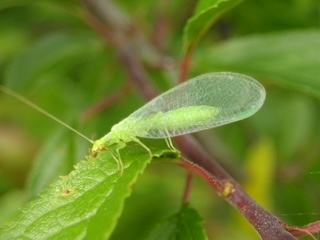
Integrated pest management stresses the importance of cultural, mechanical and biological controls before resorting to the least toxic chemical control. Since Chilli Thrips have a short life cycle (11 days) you must detect damage and implement a method of control immediately. Cut out damaged buds, blooms and leaves; remove all fallen leaves and petals from garden. A natural hero in the fight is the minute pirate bug which feast on all stages of this pest, as well as on spider mites, insect eggs, aphids, and small caterpillars. You can actually buy them on the internet!

If chemical control becomes needed choose the least toxic spray and follow label directions. During infestation all new growth will need to be sprayed weekly. Conserve or Captain Jack’s Deadbug Brew concentrate are two organic sprays with active ingredient Spinosad. Spinosad will not harm ladybugs, green lacewings, pirate bugs or predatory mites. Spray early in morning or in evening after bees are less likely to be active and before temperatures reach the 80*s.

During your daily tour of your garden look for any changes. Examine the lower leaves. If they appear yellow or brown, have fine webbing and/or look dirty, there may be an infestation of spider mites. Some areas have experienced a real problem with spider mites this year. They thrive in hot weather. They’re generally found on the undersides of those leaves. A quick check can be made by lightly running your fingers across the underside of the leaf. If it has a small grainy feel it most likely is the spider mite. A strong spray of water from below followed by an overhead shower should take care of the problem or, at least, hold it in check. Give the shower early in the day so the plant has time to dry before the sun becomes hot. Do this every 3 days for 10-14 days, inspecting regularly. It may be necessary to repeat after a few days if the infestation is heavy. Captain Jack’s Deadbug Brew is good product to use in this case. Removing the bottom leaves approximately 8” from soil level can help in reducing or eliminating the spider mite problem. This should be done earlier, prior to an infestation.

The world is dangerous enough for plants, but we gardeners are also faced with risks. One is a dangerous fungus with the scientific name Sporothrix schenckii. It afflicts humans with the fungus infection sporotrichosis which is often referred to as the Rose Thorn (or Rose Gardener’s) Disease. The fungus resides on hay, sphagnum moss, the tips of rose thorns and in soil. It can cause infection, redness, swelling and open ulcers at the puncture site. The fungus can also spread to the lymphatic system and move on to the joints and bones where it ends up attacking the central nervous system and lungs when the thorn or thorns are deeply embedded. A relatively uncommon condition, diagnosis can be complicated. Physicians often mistake it as Staph or Strep infection. Be sure to inform your physician that you are a gardener so appropriate diagnosis and treatment are rendered.

How To Photograph Red Roses

Rebecca Weersing

Let’s Get Serious with Our Photos:

A Picture is Worth a Thousand Words

by Rebecca Weersing

Our 2013 and 2014 Rose Shows included a photography section which was very warmly received. Sometimes that perfect rose won’t wait for the Rose Show but it will wait while you run to grab your camera.

Below is an article on photo­graphing red roses that I hope you will find useful. We all still have time to practice taking photos of our fall blooms.

From April to November (minus July and August) we enjoy our ‘Little Rose Show’ at our monthly meetings. The Programs Committee is planning to add a ‘Little Rose Photo Show’ for January, February and March.

New rules will follow but will be similar to the Rose Show rules. Practice makes perfect, so take time to experiment with those shots at different times of day as often as possible. Now, let’s get clicking!

The Secret to Photographing Red Roses

This month’s newsletter contributor is Rich Baer. He has a Masters Degree in Plant Physiology and started photographing roses and other garden-related items in 1990. He has taken more than 80,000 rose photos, with many of them published in the American Rose Society Magazine, ARS calendars, and other gardening publications. Rich has also won multiple awards.

I have been observing photo­ graphy ever since I could look at pictures. I always loved pictures of beautiful flowers and I have also grown roses since I was about six years old.

During that time, I gained an appreciation for the beauty of roses and have always enjoyed seeing that beauty portrayed in photography.

A number of roses in my garden were planted because I saw a beautiful picture of that rose in publication.

Unfortunately, I often see photos that don’t accurately capture a rose’s true color. This is particularly true for red roses which are quite tricky to shoot. They often turn out as a medium-pink rose.

Someone who doesn’t know a particular rose will likely believe the picture they see instead of the description that says it’s a “beautiful dark red” rose.

Why is it that so many oppor­tunities to show us the beauty of a particular rose are squandered?

The problem begins with photo­graphers trusting their equipment. Cameras come equipped with built‑in light meters. The light meter suggests what exposure should be selected for any given scene.

The majority of cameras are designed to take good pictures of people.

As a result, light meters are calibrated to read a 15% reflectance which is the amount of incident light that is reflected from the average Caucasian skin. Anything that reflects a much greater or less percent of light will be incorrectly exposed if you rely on the built-in light meters.

Dark red roses reflect much less than 15% of the light impinging upon them, but the camera does not know what it is being pointed at. It reacts to the amount of light it senses and gives you an incorrect exposure, one that grossly overexposes the rose.

When you follow the directions given by the camera, your final exposure may be two to three stops overexposed, producing a pink color instead of a beautiful dark red.

The solution to this problem is actually very simple. You have to fool the light meter into giving you the right infor­mation so that the picture will come out correctly. This can be done by using a gray card.

A gray card is usually sold as an 8.5 x 11 piece of material that is designed to reflect light at the 15% reflectance level. (I cut mine into small squares that can be used more easily than the whole piece.) They are available in most photo shops or online for less than $5.00

Grey Card

To use it, compose your shot as you normally would, but before you make the exposure, place the gray card in front of the flower to be photographed and note what the exposure your camera suggests while reading the light being reflected off the gray card.

The card should be positioned so that the light reflects from the light source, off the gray card and into the lens of the camera. Then you remove the gray card and manually keep the exposure that was suggested when reading the light off the gray card.

If your camera suggests an exposure of 1/15 of a second with an f‑stop of 20 when looking at the flower directly, the gray card may give you a suggested exposure of 1/30, 1/60 or even 1/120 of a second while using the same f‑stop. This is one, two or three stops underexposed according to the original light meter reading, but that turns out to be the necessary exposure to get the color right for dark red roses.

Copyright © 2018-present Heirloomroses. All Rights Reserved.

Old Roses FAQs

Written by Brent C. Dickerson odinthor@csulb.edu,
author, “The Old Rose Advisor” (FAQ compiled October-November, 1994)


  • Introduction and General History

    Introduction 

    The Hybrid Tea Roses, accompanied at length by the Floribunda and Grandiflora Roses so influenced by them, have been at the fore of rose progress for about a century now – so long that its forebears and predecessors have become, to many rosarians, mere footnotes rather than what they should be, valid candidates for equal interest.

    The modern “English Roses” by David Austin (modeled on the past; covered in another FAQ) and the ever-increasing groundswell of interest in old roses proper perhaps make it desirable for all rosarian netlings to gain some quick familiarity with the heritage of the rose. We therefore present the following thumbnail notes as something of a starting point, hoping that wiser heads will supply the necessary corrections or variant information, and hoping as well that those interested in more detail will check out the many fine books which deal with this at greater length. Some of these books are listed at the end of this FAQ.

    General History

    Various wild roses grow throughout the Northern Hemisphere in sites ranging from riparian and swampy all the way to those of the desert. Two geographical groupings which, at first, developed separately, have had – both in their separation and in their ultimate combination – the greatest importance in rose history: The European/Mediterranean group of species and their hybrids, and the Oriental group of species and their hybrids.

    The European roses are primarily the following: Gallicas, Albas, Damasks, Damask Perpetuals, Centifolias, and Mosses. The mainstream Oriental groups are Chinas and Teas. The European sorts – with one important exception – have only one season of bloom per year, while the Orientals repeat bloom more or less continuously.

    The European/Mediterranean roses or their forebears have been grown and loved since the earliest days of history (and no doubt before). Wreaths of Damask-like roses have been found in Egyptian tombs; seemingly the same rose – called at one time “Rosa sancta” (the Holy Rose) – has been grown down to our own days in holy places in eastern Africa. Frescoes painted during the heyday of the Minoan culture on Crete show roses. The festivals both sacred and profane of the classical Greeks included roses, and did those of the Romans. During the Roman era, a repeat-blooming variant of the Damask rose evidently appeared, the first member of a group which came to be called “Damask Perpetuals.” The Romans were so sophisticated that they developed a hot-house technology which allowed them to “force” roses into more bloom; they also imported roses from Egypt. The roses of these most ancient times in Europe and the Mediterranean were seemingly the Damasks, the Albas, and the Gallicas.

    During the Middle Ages, these roses retained a certain religious use, not only as decorations and adjuncts to (now Christian) holy festivals, but also as denizens of the medicinal gardens. Their medicinal associations as well as the simple human delight in their fragrance brought about the distillation-of-rose-essence industry, which still has local importance in a few areas of Europe (formerly France, now primarily Bulgaria).

    With the end of the Middle Ages and the rise of the merchant class, commerce in horticultural material began to flourish. Due to their fleet of trading ships and the peculiarities of their geography, the Netherlands became (and continue) a great center of horticultural business. Alongside their trade in Tulips, Hyacinths, Carnations, and the like, came something new in Occidental rose progress: systematic growing of roses from seed (previously, roses had primarily been propagated from cuttings, suckers, runners, and possibly to a small degree by grafts). This opened up the possibility inherent in sexual reproduction: Variation. One of the great holes in knowledge of rose history concerns what roses they used in this, and how they went about it – but, at any rate, whereas previously only some tens of rose cultivars existed, now, in the period up to about 1810, one or two hundred became available, indeed a whole new group, the Centifolias, arising from the complex and possibly arbitrary breeding of the Dutch.

    Around 1800, the French became interested in roses and the rose industry. This interest was fueled by the French Empress Josephine, who surrounded herself with adepts in all fields of interest to her – one was Botany – while she consoled herself at the palace of Malmaison over her divorce from her beloved Napoleon. At this palace, she collected all the available sorts of roses, and encouraged the breeding and hybridizing of new ones. Spurred by this imperial patronage, several French breeders – notably Dupont and Descemet – went to work with a vengeance, developing several hundred new cultivars in the European groups (Gallicas, Damasks, Albas, Centifolias… ). Descemet indeed very carefully kept notes of the results of particular crosses, and may be said to have been the first in the West to have practiced controlled cross-breeding. We must turn, however, to the Orient for a moment, leaving Europe in the throes of Napoleonic war and rose-breeding. There is alas little information on Oriental – or, more specifically, Chinese – rose breeding. One finds indications that roses were favored, though perhaps not to the extent that the Peony, the Chrysanthemum, or the Camellia were. What is important to note, however, is that by the period 1750-1824, four cultivars in particular – often called today (rather rustically) “The Four Stud Chinas” – had been developed. Two were true China roses, one pink, one red. Two were Tea roses, one blush, one yellowish. These were continuous-blooming, as the Oriental roses were, but not hardy, and their introduction into the Occident at length completely revolutionized rose progress.

    The French, though their Emperor had fallen and Josephine was dead, continued their efforts with both the old material and now with the new. Due to political problems, Descemet had to flee France, but an ex-soldier of Napoleon’s army, wounded in Italy, now prosperous as a hardware-shop owner, indulged his interest in roses and bought what remained of Descemet’s nursery and breeding notes after the site of the nursery was sacked by invading English troops. This was Jean-Pierre Vibert, whose intelligence and industriousness working from 1816-1850 had a lasting influence on the French rose industry.

    The crosses with the new material were made as work continued in all groups of roses. Never before the 1820’s had such a diversity of disparate roses been available – and never since. Almost every available species, no matter how obscure, had varieties and subvarieties of varying color or form due to breeding or sports. A sport of the Centifolia, the Moss Rose, had appeared a few decades before, and now began to spread its unique array of cultivars over the rose scene as the breeders worked with it.

    As the 1820’s became the 1830’s, however, interest was concentrated on the breeding between the Oriental roses and the Europeans. Due to the laws of genetics, the first progeny of crosses between once-bloomers and repeat-bloomers were once-blooming. As they were crossed with each other, however, and then back to the Chinas and Teas, repeat-blooming hybrids began to appear. These were crossed with Damask Perpetuals. The 1830’s were a time of ferment and experimentation with these.

    Meantime, on an island in the Indian Ocean (though there is some debate about this), a new cross between a China and a Damask Perpetual appeared. This was the Bourbon Rose. Its appearance at this time made it a part of the breeding going on primarily in France (though efforts were also underway in England).

    The outcome of all these crosses jelled in the 1840’s into the group called “Hybrid Perpetuals” – a name which implied to the people of the time “Damask Perpetuals which have been hybridized with Other Sorts.” This group, taking in cultivars of all colors and forms, and (best of all to the people of the era) at least somewhat re-blooming and hardy, overwhelmed almost all the other groups. Interest in the old European sorts waned; they were gradually set aside, kept mainly as sentimental remembrances of the past by a few devotees.

    The idea of rose shows and competitions was on the rise at this time. These events began for better or worse to standardize the concept of what a rose blossom should look like, and made many concentrate on the rose as a producer of exhibition items rather than a decorative plant for the garden.

    Breeding experimentation continued. The original, rather weakly-growing, Teas were crossed with Bourbons to make a new, robust sort of Tea. As the search to widen the range of Hybrid Perpetuals continued, they were crossed with the Teas producing a group which came to be known as Hybrid Teas. Efforts along these lines really got underway seriously in the 1870’s, though there had been a few earlier such crosses as well.

    But, still experimentation continued. A strong yellow rose was wanted. The Teas had light yellows among their number, but these had a tendency to fade, and the plants were not as robust as people had become accustomed to from the Hybrid Perpetuals. A deep yellow species, R. foetida, had been used to produce a Tea ‘Ma Capucine’ by the breeder Levet in 1871, but the plant was weak-growing, discouraging further work. In the 1890’s, Pernet-Ducher turned to the problem, and, after a long series of experiments with Teas, Hybrid Teas, Hybrid Perpetuals, and (finally) R. foetida, produced offspring around 1900 from a cross of the HP ‘Antoine Ducher’ and R. foetida which had a yellow/gold/coral tone that seemed to promise much. Further developments from this cross were called “Pernetianas,” and at length they were combined with the original Hybrid Teas to produce what might be called “Hybrid Hybrid Teas” – the Hybrid Teas of today.

  • Gallica Roses

    These are selections bred from the “French Rose,” R. gallica. A Gallica will typically have a stocky plant, an open blossom which shows the stamens and is held upright, usually in colors varying on one side or the other from rose-red. Variations, however, are almost limitless as well as subtle, and all degrees of height and blossom may be found, from near singles to full doubles, from blush pinks to maroon, from clear homogeneous colors to cloudy, striped, and/or spotted blossoms. The plants are easily propagated by their runners or suckers when on their own roots. Some examples are ‘D’Aguesseau’, ‘Camaieux’, ‘Tuscany’, ‘Versicolor’.

  • Alba Roses

    As is so often the case with roses, the precise origin of the Alba group is much debated; possibly R. canina x R. damascena, or R. corymbifera x R. gallica, or …? Albas typically make large, healthy shrubs with fragrant white or light pink blossoms, usually in few-flowered clusters. They have particular associations with the Middle Ages and castle gardens. ‘Great Maiden’s Blush’, ‘Semiplena’, ‘Jeanne d’Arc’, ‘Konigin von Danemark’, ‘Pompon Blanc Parfait’.

  • Damask Roses

    Damask Roses are supposed to be from a hybridization between R. gallica and R. phoenicia which occurred in Asia Minor and became distributed throughout Syria and the Near East and Middle East generally. The Crusaders – according to tradition – brought it back to Europe from Damascus (hence the name) in 1254. However, there is a most daunting and seemingly impenetrable fog around R. damascena. References can be found to “the common Damask” as late as the 1820’s, and yet what an author is referring to by this term remains elusive. It indeed frequently seems that “the Common Damask” is rather a Damask Perpetual! Worse, cultivars which we today consider as defining the group – ‘Leda’, perhaps, and ‘Mme. Hardy’ – seem to have been hybrids. ‘Celsiana’, a most beautiful and popular rose, is possibly “typical” Damask; and yet, even it has its mystery (current research seems to indicate that the “pre-1750” date usually put forward is whimsical). Even ‘York and Lancaster’, frequently considered to be a sport of the original (red?) Damask, is supposed by one authority to be an Alba on the basis of a sporting back to something like the Alba ‘Semiplena’! The cultivar used for the rose oil industry in Bulgaria, ‘Trigintipetala’, supposedly a long-ago import from Turkey, is perhaps dependably R. damascena … . That said, characteristics associated with our concept of what a Damask should look like are: upright frequently arching canes, grayish-green somewhat rugose somewhat hirsute leaves, large fragrant blossoms in few-flowered clusters, delicate in appearance, and ranging in color from white to deep pink depending on the cultivar. ‘Ville de Bruxelles’, ‘Celsiana’, ‘Mme. Hardy’, ‘Mme. Zoetmans’, ‘Kazanlyk’.

  • Centifolia Roses

    The genetic background of the much-beloved Centifolia roses is also much debated. Some have reported wild Centifolias from various sites in Europe and Asia, others try to piece together mosaics of species to make the Centifolia a complex hybrid. They were much featured in the paintings of the Dutch masters. Typically, a mature Centifolia will be 4-5 feet high, leafy, and bear lush, fragrant, pink blossoms which not only nod in themselves, but which also frequently cause the plant’s branches to nod gracefully under their weight. Colors of various cultivars range from white to deep rose-red, and there are striped and spotted ones as well. ‘Common Centifolia’, ‘Bullata’, ‘Des Peintres’, ‘La Noblesse’, ‘Tour de Malakoff’, ‘Unica’.

  • Centifolia Mosses.

    These roses, originally a sport of the Centifolia, bear on their flower-stems and sepals a mutation of the glands making it appear as if a green or reddish-brown moss were growing there, adding a unique delicacy to the buds. In this group can be found some deep crimsons, lacking among the regular Centifolias; this is possibly due to some hybridization involving crimson China roses. ‘Common Moss’, ‘Gloire des Mousseux’, ‘William Lobb’, ‘Deuil de Paul Fontaine’, ‘Striped Moss’.

  • Centifolia Pompons.

    There are also several Centifolias which are to a greater or lesser degree miniatures or dwarfs, with small, charming blossoms. ‘De Meaux’, ‘Petite de Hollande’, ‘Spong’, ‘Little Gem’.

  • Agathe Roses

    One of the least-known groups, Agathes are seemingly complex hybrids with a very strong influence from the Damasks and possibly R. X francofurtana. They are characterized by rather compact, leafy bushes, usually bearing small to medium sized full, tight blossoms. Due to years of unfamiliarity, generations of rosarians have listed them among the Gallicas. ‘Fatime’, ‘Marie-Louise’, ‘Majestueuse’, ‘Bouquet Rose de Venus’, ‘Victorine la Couronnee’.

  • Turbinata Roses

    The Turbinatas result from a cross called R. X francofurtana (between R. gallica and R. majalis, a European species.) The main representative of this group is ‘Imperatrice Josephine’ with large foliage and big, wavy blossoms of intense pink. Turbinata roses often have some difficulty in opening their buds.

  • Rubiginosa Roses

    The Rubiginosa or Sweetbriar rose is a tall-growing rose the distinctive characteristic of which is its foliage which, particularly after a rain, wafts a green-apple scent. The blossoms of the original are single and pink or white, giving rise to coral-red hips, making quite a show in the Fall. A number of hybrids were produced in the 1890’s by Lord Penzance, much extending the color-range of the sort, at some expense to the fragrance of the foliage. ‘Clementine’, ‘Hebe’s Lip’, ‘Lord Penzance’, ‘Amy Robsart’, ‘Greenmantle’.

  • Canina Roses.

    The Canina or Dog Rose is closely related to the above, lacking however the scented foliage. The hips were considered medicinally effective against bites from mad dogs, hence the name. The Austro-Hungarian breeder Geschwind had a great interest in R. canina due to its hardiness, and produced several hybrids in the latter part of the 19th century; others have also made sparing use of it in breeding work. ‘Una’, ‘Creme’, ‘Freya’, ‘Kiese’, ‘Theresia’.

  • Hemispherica Roses

    Will the day of R. hemispherica ever come? Or is it already past? Known since the 1600’s, R. hemispherica has much whetted the appetites of rosarians because of its deep yellow flowers, double in two varieties, its glaucous foliage, and the difficulty of its culture. It should be tried by those in dry, Mediterranean-like climates. There are only three Hemisphericas: ‘Simplex’, ‘Multiplex’, and ‘Pompon Jaune’ – the lattermost with small double blossoms, reportedly the most difficult of all.

  • Foetida Roses

    R. foetida has long attracted the attention of horticulturists and botanists because of its bright coloring, and at length entered into the mainstream by the role it played in the production of the Pernetiana roses, leading directly into the modern Hybrid Tea. The plant is a large, arching shrub. R. foetida itself is bright yellow, ‘Bicolor’ is coppery orange on the inside and yellow on the outside of the petals, ‘Persian Yellow’ is a double yellow. Several hybrids have been produced, of which the following are notable: ‘Le Reve’, ‘Star of Persia’, ‘Harison’s Yellow’. The Pernetiana group of hybrids is covered in a separate section.

  • Pimpinellifolia Roses (including Spinosissima).

    These roses are extremely hardy, have attractive foliage with various tints in the Fall, and bear sprightly single or double blossoms in most all the colors roses have, white, pink, red, yellow. Many are very compact, neat-looking bushes. ‘William III’, ‘William IV’, ‘Doorenbos Selection’, ‘Altaica’, ‘Marmorata’, ‘Sulphurea’. Three repeat-blooming cultivars were produced, hybrids with the Damask Perpetual, one of which is still with us: ‘Stanwell Perpetual’.

  • Boursault Roses

    The Boursaults are of the scandent or climbing habit, and are traditionally supposed to derive from a Napoleonic-era cross between one of the earliest Chinas and R. pendulina, an alpine rose. The blossoms are rather large, come in larger or smaller clusters, appear early, are in shades of pink and red, and sometimes re-appear later in the season. The foliage in some sorts colors well in the Fall. ‘Mme. de Sancy de Parabere’, ‘Morletii’, ‘Amadis’, ‘Calypso’.

  • Sempervirens Roses

    R. sempervirens is a climbing species from the Mediterranean area which has glossy, persistent leaves and large clusters of small white flowers. In the 1820’s particularly, several breeders undertook work with it, most notably A. Jacques, who hybridized it with China or Noisette roses to come up with a series of climbers in shades of pink to white, climbers which are still used and appreciated today. ‘Felicite et Perpetue’, ‘Adelaide d’Orleans’, ‘Flore’, ‘Dona Maria’. (The greatly popular Noisette ‘Aimee Vibert’ is also an R. sempervirens cross; it is however placed among the Noisettes because it reblooms.)

  • Setigera Roses

    R. setigera is a tough, hardy native of the American prairies, and has been used to produce a number of similarly tough and hardy climbers, first of all in the mid-19th century by several American nurserymen whose crosses with Noisettes, Gallicas, and no one knows what else, gave us the very beautiful varieties ‘Baltimore Belle’, ‘Gem of the Prairies’, ‘Eva Corinne’, ‘Queen of the Prairies’, etc. Later breeders were to add ‘Corporal Johann Nagy’, ‘Ovid’, ‘Mrs. F.F. Prentiss’, and eventually a series of modern climbers of which the best known, perhaps, is ‘Doubloons’.

  • Wichuraiana Roses

    R. wichuraiana is a wide-spreading cluster-flowered climber/groundcover rose from Japan and the Orient generally. The American Mr. Horvath – responsible for the ‘Doubloons’ just mentioned above – began hybridizing with it immediately upon its appearance in the West in the early 1890’s, crossing it with Polyanthas and Chinas. A person connected with the Barbier nurseries in France happened to visit, became interested in the results, and got the similar and highly successful Barbier crosses underway back home (though it is now thought that the closely-related R. luciae was used by the Barbiers for a number of the crosses). Many, many very meritorious ramblers from these and other breeders were introduced in the following years, some of the greatest popularity: ‘Dorothy Perkins’, ‘Evangeline’, ‘May Queen’, ‘Leontine Gervais’, ‘Aviateur Bleriot’.

  • Multiflora Roses

    Though a few Multiflora climbers had been produced early in the 19th century by such old masters as Vibert (‘De la Grifferaie’) and Laffay (‘Laure Davoust’), and others appeared now and then for the rest of the century, the main impetus towards hybridizing with the Oriental R. multiflora came with the introduction of ‘Turner’s Crimson Rambler’ in 1893. Over the next twenty-five or so years, dozens and dozens of Multiflora Ramblers – stiffer, more upright than Wichuraiana Ramblers – were released, some of them the so-called “blue” ramblers. ‘Veilchenblau’, ‘Bleu Magenta’, ‘Hiawatha’, ‘Caroubier’, ‘Ghislaine de Feligonde’, ‘Tausendschon’.

  • Damask Perpetual Roses

    This group was the only repeat-blooming one known to the Europeans until the advent of the China roses. It had indeed been known seemingly in at least one variety (‘Bifera’) since Roman times. Another cultivar (‘Tous-les-Mois’) appeared in the 17th century, and breeding work in earnest began on them in the 1810’s. Vibert and his successors in his firm had a very great interest in this group, and introduced by far the greatest number of them, the last one (‘Rembrandt’) of their long-pursued line coming out in 1883. They typically have stocky, healthy, decorative bushes, with the often exquisitely double, fragrant blossoms nestling in the leaves. There are several races of them: the Biferas, with tall, arching growth; the Portlands, showing Gallica influence; the Tous-les-Mois, the typical sort, bushy and compact with tight blossoms; and the Trianons, tall, vigorous, Hybrid-Perpetual like growth with clusters of flowers. The colors range from white through all the pinks to deepest red. ‘Jacques Cartier’, ‘Yolande d’Aragon’, ‘Portland Rose’, ‘Rose du Roi’, ‘Joasine Hanet’, ‘Marbree’.

  • China Roses

    Chinas – selectively bred from R. chinensis – had been grown in Chinese gardens long before the Occident knew anything about them. The agent of their first appearance in the West is under some dispute, with claims being made for Sweden, Britain, and Italy. A pink form and a red form entered commerce in the West in the 1790’s, and breeding quickly got underway, particularly in France and, to some degree, Italy. The reasons for their quick popularity were primarily their continuous bloom and, at least initially, the then-current rage for things Oriental. Their main difficulty was their lack of cold-hardiness. Chinas typically make, bushy, twiggy plants, often quite irregular in outline, and range in color from deepest red and maroon through pink to white. Some hybridized with the Teas show warm tones of yellow, saffron, salmon, and orange. The China group has long been considered a refuge for “decoratives” as opposed to exhibition roses; cultivars of Tea parentage which did not show the blossom-form expected of Teas would be offered as Chinas. ‘Cramoisi Superieur’, ‘Parsons’ Pink China’, ‘Eugene de Beauharnais’, ‘Archiduc Charles’, ‘Ducher’, ‘Nemesis’, ‘Mme. Eugene Resal’, ‘Arethusa’, and the green rose ‘Viridiflora’.

  • Tea Roses

    Teas are so called because many discern in their blossoms the scent of “a newly-opened sample of the choicest tea”. Their supposed ancestry is R. chinensis x R. gigantea, the latter being a high-climbing Chinese rose with large primrose-colored blossoms fading quickly to white. The British introduced the first two cultivars to the West in 1810 and 1824; the French quickly began hybridizing with them. The spiralling starry form now usually associated with an unfurling rose bud derives from the Tea and, to a lesser extent, the China. Teas are considered by many aficionados to have the most exquisite form and coloration in the world of the Rose. The problem confronted by the French, however, was that the bushes producing these blossoms were frail (at least, in France and England!), and the blossoms very susceptible to damage from the weather. Some took to growing them as greenhouse plants; others tried to improve the plant by cross-breeding. Several interesting results were produced, as we shall see in other categories below. In the history of the Teas, however, the most important crosses were with the Bourbons. This began a new race of Teas, most of which were quite unlike the old ones: large, vigorous, thick-limbed shrubs, often with perfectly healthy, beautiful glossy foliage. The colors range throughout the rose palette (reds, pinks, whites, blushes, yellows, oranges), but most special to Teas are the colors of dawn: tones of gold, warm pink, and rose shading into each other, with delicate tints and highlightings. ‘Anna Olivier’, ‘Maman Cochet’, ‘Safrano’, ‘Comtesse de Labarthe’, ‘Mme. Antoine Mari’, ‘Souvenir de Therese Levet’, ‘Catherine Mermet’, ‘Etoile de Lyon’, ‘Devoniensis’, ‘Lady Hillingdon’.

  • Bourbon Roses

    Bourbon Roses are named for the Ile Bourbon, now called Reunion, in the Indian Ocean, where they traditionally are supposed to have originated from a natural cross between the China ‘Parsons’ Pink’ and the red ‘Tous-les-Mois’, a Damask Perpetual, two roses which were used as hedge material on the island. (This, however, is an area of hot dispute in almost every particular.) Seeds of this plant, and cuttings of the plant, showed up in Paris in 1819 and 1821 respectively. The way in which the virtues of its disparate parents were combined made these new roses popular, and after ten years of largely unsuccessful attempts, good new Bourbons began to come out of the breeding grounds in the 1830’s. In the best of them, vigor was combined with floriferousness, and beauty with fragrance. A typical Bourbon will have the arching growth hearkening back to its Damask ancestors, with the lush flowers and fragrance from much the same source; but it will also have a strong tendency to rebloom from the China ancestor, as well as a certain often subtle influence of the China flower form. Bourbons, however, are often not typical at all, and range from the arching growth just mentioned to the very dwarf, China-like growth of the cultivar ‘Hermosa’, indeed one of the oldest Bourbons still available (it had shown up by 1835). They range in color from deep reds through pinks to blush and white. The easygoing charms of the Bourbons have returned them to the forefront of popularity among today’s old rose people, though very few were introduced after 1900; their original heyday was the period 1830-1850. ‘Souvenir de la Malmaison’, ‘Reine Victoria’, ‘Louise Odier’, ‘Gloire des Rosomanes’, ‘Mme. Isaac Pereire’, ‘Acidalie’, ‘Boule de Neige’.

  • Noisette Roses

    Just after 1800, John Champneys of Charleston, South Carolina, crossed a pink China (traditionally supposed to be ‘Parsons’ Pink’) with the Musk Rose R. moschata, and obtained a large-growing shrub with clusters of lightly fragrant pink blossoms, ‘Champneys’ Pink Cluster’. A neighbor there, Philippe Noisette, planted its seeds and grew a plant which was similar but dwarfer, and which had larger clusters of doubler flowers, ‘Blush Noisette’. Philippe Noisette’s brother happened to be a major French nurseryman in Paris, and it was through this latter that the rose found commercial release around 1815. The industrious French breeders soon went to work, and within ten years, there were more than a hundred Noisettes in the catalogs in colors from white to crimson-purple. The new yellow Tea showing up about that time, it was crossed with the Noisettes, with a result which fundamentally changed the Noisette group; the blossoms became larger, the clusters smaller, and the plants more Tea-like, with an inclination towards “climbing.” The group reached its apogee or indeed apotheosis in 1853 with the release of one of the most beloved roses of all, the climber ‘Gloire de Dijon’. Further climbing Noisettes, mostly in shades of yellow or pinkish yellow, were released through the turn of the century when newer, hardier climbers of different background took the fore. The seemingly final stage of Noisettes, returning them much to their original concept of multi-flowered shrubs, was coming with the development of the Hybrid Musks (comprising crosses between Noisettes and Hybrid Teas, etc.) in the 1910’s, 1920’s, and beyond. ‘Gloire de Dijon’, ‘Desprez a Fleur Jaune’, ‘Bougainville’, ‘Chromatella’, ‘Solfatare’, ‘Marechal Niel’, ‘Aimee Vibert’, ‘William Allen Richardson’, ‘Lily Metschersky’, ‘Lamarque’.

  • Hybrid China, Hybrid Bourbon, Hybrid Noisette Roses

    These crosses between Chinas, Bourbons, Noisettes, and the old European sorts (Gallicas, etc.) were made initially as an attempt to deal with the lack of hardiness of these new sorts with R. chinensis background. The outcome was quite varied. The results are not absolutely clear, because offspring close to the, say, Gallica parent would be sold as a Gallica, and offspring close to the, say, China parent would find itself sold as a China; thus, many of these hybrids, produced in the 1820’s and 1830’s primarily, masquerade as something they are not genetically. The important thing, however, is that, due to the laws of genetics, almost the entirety of these are once-bloomers – but often blooming that one time a season with the most extreme profusion and beautiful fragrant flowers. The plants are most often climber-like and of the most extreme vigor, frequently heavily foliated. Novices and others must be careful to distinguish between (once-blooming) Hybrid Chinas and (repeat-blooming) China hybrids; (once-blooming) Hybrid Bourbons and (repeat-blooming) Bourbon hybrids; (once-blooming) Hybrid Noisettes and (repeat-blooming) Noisette hybrids. ‘George IV’, ‘Belle de Crecy’, ‘Duchesse de Montebello’, ‘Mme. Plantier’, ‘Triomphe de Laffay’, ‘Comtesse de Lacepede’, ‘Las-Cases’, ‘Malton’.

  • Hybrid Perpetual Roses

    As the breeding work continued in the late 1820’s with the Hybrid Chinas, Hybrid Bourbons, and Hybrid Noisettes, they were crossed with the hardiest re-blooming roses they had on hand, the Damask Perpetuals. Thus was born the race of Hybrid Perpetuals, which soon grew to encompass as well any re-blooming progeny of the Hybrid Chinas, etc. A first, very obscure, reblooming hybrid, ‘Hybride Remontant a Bois Lisse’, peeks at us from 1829, another eight or so show up over the next decade, and soon the floodgates opened, thousands being released over the next sixty years. They were crossed with each other and with the Bourbons and Damask Perpetuals until a nearly full range of color from blush white to deepest red and purple was obtained; only purest white and yellow eluded them for a time, spurring interesting experiments (as we shall see). Typically, a Hybrid Perpetual will have big, cabbagey blossoms at the top of a long, often arching cane. As HP’s were developed simultaneously with the rise of rose shows and competition, the forms became increasingly refined over the years from the original muddled or quartered look (now back in fashion!) to a rather fulsome version of what we might expect in a rose of today. Many HP’s show a tendency towards fungal diseases, requiring a careful program of spraying. The thrill of a garden full of big, fragrant HP’s in full bloom is something not to be forgotten; many will think of this and be quick to forgive them their often miserly rebloom. They began to fade from the scene with the advent of the Hybrid Tea. ‘Baronne Prevost’, ‘Victor Verdier’, ‘Charles Lefebvre’, ‘Jules Margottin’, ‘American Beauty’, ‘General Jacqueminot’, ‘Frau Karl Druschki’, ‘Georg Arends’, ‘Mrs. John Laing’, ‘Souvenir d’Alphonse Lavalle’, ‘Reine des Violettes’, ‘Tartarus’.

  • Old Hybrid Tea Roses

    Ah, me. Here one is, a breeder in, say, the late 1860’s, trying to breed a “different” HP among the hundreds coming out every year, one with shapely blossoms to win at shows, one that blooms more to attract those looking for garden decoration, maybe one that’s white or even yellow! The obvious answer, and one that occurred to several breeders – but most notably to Lacharme of France and Bennett of England – was to breed the Tea into the Hybrid Perpetual; they were willing to risk some loss of hardiness to gain something “different.” Though the occasional HP x T cross had been made before and released, the first long-term programs of such were made by Lacharme and Bennett. From the mid-1870’s on, others tried their hands at it increasingly; and, by the 1890’s, Hybrid Teas were replacing Hybrid Perpetuals in the gardens of “modern”-thinking rosarians. The Hybrid Teas bloomed more, were bushier, had more beautiful leaves and better-shaped flowers, and the color-range, somewhat limited in the HP’s, was extended into the warm, exotic range of the Teas; the HP’s mainly held ground where their greater hardiness made them more desirable. The problems with these new HT’s was that they were, as we just saw, more tender, and they carried with them the problem that many Teas had of nodding on the stem; further, the color range, though wide, was muted: milky whites, creamy pinks, pale coral pinks, dull rose-coloreds, no real full-bodied reds at first; worst, perhaps, they were no improvement in health. And yet . . . and yet . . . they are beautiful, delicate creatures. (Traditionalists remind me to cite ‘La France’ as “the first Hybrid Tea”; it was introduced in 1867, as a Bourbon hybrid.) ‘Captain Christy’, ‘Mme. Lacharme’, ‘Antonine Verdier’, ‘Jean Sisley’, ‘Julius Finger’, ‘Grace Darling’, ‘Viscountess Folkestone’, ‘Mme. Caroline Testout’, ‘Kaiserin Auguste Viktoria’, ‘Antoine Rivoire’, ‘Mme. Wagram, Comtesse de Turenne’.

  • Pernetiana Roses

    Though the new HT’s had definite yellow tinges from their Tea connections, Pernet-Ducher of Lyon, France, wanted to develop a deep yellow. Experimentation in the 1890’s with the difficult to breed with R. foetida at length brought a cross between it and an old purple-red HP, ‘Antoine Ducher’. From this came ‘Soleil d’Or’ of 1900, a rather difficult-to-grow plant with blossoms of a revolutionary coloration: gold/pink/saffron/etc., much more pronounced than it had ever been in the Teas. This cross and its nearer descendants were called “Pernetiana Roses” in honor of Pernet-Ducher. They are characterized by growth and health quirks associated with R. foetida (glossy leaves, die-back, fungal problems). To remedy these problems, and to satisfy what would be the natural urge, breeders began crossing these Pernetianas with the Hybrid Teas of the time, producing wild colors in oranges, hot pinks, bright yellows, flame, apricot . . . By the late 1920’s, these two races had merged to produce the Modern Hybrid Tea of today. ‘Soleil d’Or’, ‘Mme. Edouard Herriot’, ‘Los Angeles’, ‘Souvenir de Claudius Pernet’, ‘Souvenir de Georges Pernet’, ‘Willowmere’, ‘Autumn’, ‘California’, ‘Arthur R. Goodwin’, ‘Lyon-Rose’.

  • Mossy Remontants

    While the HP’s were getting underway in the 1830’s and 1840’s, another new sort of repeat-blooming rose made its appearance: the Mossy Remontant. The first one was a sport of the Damask Perpetual ‘Bifera’ in 1835; but the first one intentionally bred was released by Mauget of Orleans, France, in 1844. Over the next forty or so years, a number of Mossy Remontants were released, some quite charming indeed, though many are neither very mossy nor very remontant (reblooming). Many are close to the Damask Perpetuals in plant habit, having undoubtedly been bred from them, and make neat little bushes in the garden. Others seem to have Hybrid Perpetual relations, and grow in the gawky way of that tribe. These do better in warm climates than do the regular Mosses. Their colors range from white through pink to deep red. ‘Alfred de Dalmas’, ‘Soupert et Notting’, ‘Cesonie’, ‘Mme. Edouard Ory’, ‘Pompon Perpetuel’, ‘Salet’, ‘Deuil de Paul Fontaine’, ‘Baron de Wassenaer’.

  • Polyantha Roses

    In 1869, Guillot fils of Lyon, France, sowed seed from R. multiflora ‘Polyantha’, a large shrub introduced from Japan around 1862, with clusters of single, white, fragrant blossoms. From this, he obtained a large crop of much varied seedlings; “I didn’t have so many as two which resembled their mother!” said he. Elsewhere in Lyon, the breeder Rambaux had sown a separate crop, with similar results. Guillot fils got seeds from a semi-double in the crop, sowed these, and from this arose the first Polyantha, ‘Paquerette’, released in 1875. Alongside the “pure” Polyanthas, breeders crossed them with Teas to obtain clusters of small but perfectly-formed buds, as with ‘Mlle. Cecile Brunner’ and ‘Perle d’Or’. Polyanthas normally produce dwarfish, compact bushes ranging from one foot to three in height, bearing often immense clusters of small blossoms which can range through the whole spectrum of rose coloration. Some have a tendency towards leaflessness in the Summer. New Polyanthas continue to be bred and released in the present-day world of roses due to their unique qualities for breeding and display. They were crossed beginning in the Teens and 20’s with Hybrid Teas to produce the Floribunda group. ‘Mlle. Cecile Brunner’, ‘Perle d’Or’, ‘Rita Sammons’, ‘Lady Anne Kidwell’, ‘Mignonette’, ‘Clotilde Soupert’, ‘Eblouissant’, ‘Anne Marie de Montravel’, ‘Mme. Norbert Levavasseur’, ‘Perle des Rouges’, ‘Merveille des Rouges’, ‘Margo Koster’, ‘Sunshine’.

  • Rugosa Roses

    Rugosa roses are those derived from the thorny Japanese rose R. rugosa, the two mains forms of which are wine-red and white. Though a few crosses had been made earlier (as early as the 1820’s), in the 1890’s several hybridizers became interested in working with the species due to its hardiness, health, vigor, and special beauty. This lattermost is due to its glossy green leaves and splendid orange hips as well as its large, beautiful flowers. Due to the ease with which it crosses, much has been tried with the Rugosas, and efforts continue today. Colors range from white through pink to red and purple, and yellow can be found as well. There are new dwarfer cultivars, but normally the specimen will reach five or six feet in height. Some old cultivars: ‘Roseraie de l’Hay’, ‘Blanc Double de Coubert’, ‘Fimbriata’, ‘Mme. Alvarez del Campo’, ‘New Century’, ‘Comte d’Epremesnil’,’Grootendorst Supreme’, ‘Rose Apples’.

  • Miscellaneous Roses

    There are many small groups of roses we cannot cover here due to limitations of space. We can, however, at least mention a few names from some of these groups: Arvensis (‘Dundee Rambler’, ‘Ayrshire Queen’, ‘Mme. Viviand-Morel’, ‘Ruga’), Banksia (‘Albo-Plena’, ‘Lutescens’, ‘Luteo-Plena’), Bracteata (‘Alba Odorata’, ‘Maria Leonida’, ‘Mermaid’), Hugonis (‘Albert Maumene’, ‘Dr. E.M. Mills’), Laevigata (‘Ramona’, ‘Anemonen Rose’, ‘Silver Moon’), Musk (‘Flore Pleno’, ‘Fraser’s Pink Musk’, ‘Princesse de Nassau’), Roxburghii (‘Ma Surprise’, ‘Triomphe de la Guillotiere’, ‘Domaine de Chapuis’, ‘Chateau de la Juvenie’), Soulieana (‘Chevy Chase’, Kew Rambler’), Pomifera (‘Duplex’); Hybrid Musk, based on Noisette/HT crosses (‘Felicia’, ‘Francesca’, ‘Pax’, ‘Nur Mahal’, ‘Sammy’, ‘Penelope’), Lambertiana, based on Multiflora/HT crosses (‘Trier’, ‘Gneisenau’, ‘Lessing’, ‘Eva’), Thomasiana, based on Wichuraiana/HT crosses (‘Bishop Darlington’, ‘Bloomfield Dainty’, ‘Bloomfield Perfection’), Rubrifolia, a fascinating species with reddish glaucous foliage (‘Carmenetta’, ‘Flora Plena’, ‘Semi-Double’). Additionally, many species make charming additions to the garden in their own right. Some would be: R. brunonii, R. californica, R. carolina, R. cymosa, R. gigantea, R. macrophylla, R. moyesii, R. omiensis ‘Pteracantha’, R. pisocarpa, R. stellata ‘Mirifica’, R. xanthina, and many others – not forgetting the very close cousin of roses, Hulthemia persica, which has recently entered into some mainstream rose breeding.

  • Middle Aged Roses

    Increasingly without a home are the very beautiful Hybrid Teas and Floribundas introduced in the 1920’s, 1920’s, 1940’s, 1950’s . . . Too young to be “old” roses, too old for many current-day rosarians, these wonderful cultivars need an interest group of their own.

  • Current Questions/Activities in the Field.

    There are many questions in the field of Old Roses relating primarily to history (cultural questions are, in the main, the same as for modern roses). Those interested could spend many pleasurable hours trying to obtain biographical data on breeders, or researching the methods or cultivars used in their breeding. Persons in or around The Netherlands are in a position to do the field a very great favor by putting together a major article or book in English about the breeders, methods, and cultivars used by the Dutch in their breeding 1600-1830, as there is virtually nothing on this very very important subject available in English (or French). Questions about the history and make-up of the Damasks and Damask Perpetuals remain without firm answers, and are probably in the province of scientific rather than historic investigation.

    An important activity undertaken and enjoyed by many old rosers is to visit old gardens, cemeteries, churches, town sites, and the like to find, propagate, and try to identify old roses found growing there. Debate on the subject of identification is often hot and heart-felt, many people having sentimental attachments to names long familiar or roses they have found; those entering into the fray need to have obtained accurate descriptions from old sources such as catalogs, magazines, or books published when the cultivars were new. Those in a position to do so can check the old bulletins or minutes of their local horticultural society for data about what old roses were popular in the area in a particular era; those living in old rose-breeding areas may stumble on a gold mine of information when they do so. Those more interested in growing could put together collections of roses from, for instance, one breeder, and then write an article comparing, contrasting, extrapolating results. A major need is to import into the U.S. cultivars which at present exist only in Europe; the person attempting to do so needs to be able to meet the requirements of the USDA quarantine as well as to negotiate the difficulties of doing business overseas.

  • Organizations

    There are a number of organizations which would be of interest to devotees of old roses. We cannot know or list all of them; neither listing nor failing to list here indicates any opinion of their worth. Here are some addresses correct as of the time of writing (November 1, 1994); please write for information:

GENERAL ROSE SOCIETIES

  • American Rose Society P.O. Box 30,000 Shreveport, LA 71130 USA
  • Canadian Rose Society Mrs. Anne Graber, Secr. 10 Fairfax Cr. Scarborough, Ont M1L 1Z8 Canada
  • The Royal National Rose Society Chiswell Green St. Albans, Herts. AL2 3NR England
  • La Societe Francaise des Roses Parc de la Tete d’Or 69459 Lyon France
  • Verein Deutscher Rosenfreunde Mainaustrasse 198A 775A Konstanz GermanyOLD ROSE SOCIETIES
  • Dallas Area Historical Rose Society P.O. Box 38585 Dallas, TX 75238-0585 USA
  • Heritage Roses Group, North-East Lily Shohan RD 1 Box 299 Clinton Corners, NY 12514 USA
  • Heritage Roses Group, North Central Henry Najat 6365 Wald Road Monroe, WI 53566 USA
  • Heritage Roses Group, North West Judy Dexter 23665 41st Street South Kent, WA 98032 USA
  • Heritage Roses Group, South East Jan Wilson 1700 S. Lafayette St. Shelby, NC 28150 USA
  • Heritage Roses Group, South Central Karen Walbrun Rt. 2 Box 6661 Pipe Creek, TX 78063 USA
  • Heritage Roses Group, South West (Last name A-G) Betty L. Cooper 925 King Drive El Cerrito, CA 94530 USA
  • Heritage Roses Group, South West (Last name H-O) Marlea Graham 100 Bear Oaks Drive Martinez, CA 94553 USA
  • Heritage Roses Group, South West (Last name P-Z) Frances Grate 472 Gibson Avenue Pacific Grove, CA 93950 USA
  • Heritage Rose Foundation 1512 Gorman Street Raleigh, NC 27606 USA
  • Les Amis de la Roseraie Roseraie Departemental Rue Andre Watel 94240 L’Hay-les-Roses France

Nurseries

We alas cannot list all old rose nurseries, and do not wish to seem to be recommending any one or group over any other in something involving commercial interests. The societies listed above can provide lists of nurseries, at least one recent book (“The Quest for the Rose”) lists several for a number of countries around the world, and there is currently (November 1, 1994) a thread on this newsgroup discussing rose suppliers (if it is gone, start another thread asking!).

Books

All books published on this subject should be examined with interest and discernment. Here are a few recent ones; we are no doubt forgetting several equally worthy ones.

  • “The Graham Stuart Thomas Rose Book”, by Graham Stuart Thomas. Timber Press, 1994. (Timber Press phone #: [in USA] 1-800-327-5680; [elsewhere] (503) 227-2878.)
  • “The Quest for the Rose”, by Roger Phillips and Martyn Rix. Random House, 1993.
  • “The Old Rose Advisor”, by Brent C. Dickerson. Timber Press, 1992.
  • “Roses”, by Peter Beales. Harvill, 1992.
  • “Old Roses and English Roses”, by David Austin. Antique Collector’s Club, 1992.
  • “Rosa Rugosa”, by Suzy Verrier.
  • “Les Roses Anciennes”, by Charlotte Testu. Flammarion, 1984.

About English Roses

english roses

Version: 2.10 Last-modified: 12 Sep 1996
Written by Bill Chandler, chandler@onr.com


About this document:

Quite often in rec.gardens.roses, someone will make a reference to David Austin Roses, Austin Roses, English Roses, or just DA or ER.

These terms all refer to a group of roses first introduced in 1969 by the English rose hybridizer David Austin.

These roses have created quite a bit of interest recently from some rose gardeners. This document tries to be an introduction for those unfamiliar with English Roses.

Questions:

  1. What are English Roses?
  2. What is causing the interest in English Roses?
  3. What are some popular varieties of English Roses to try growing?
  4. What are some newer varieties of English Roses to look forward to?
  5. Are there any good red varieties of English Roses?
  6. What kind of care do English Roses need?
  7. What are some of the problems with English Roses?
  8. What is the genealogy of English Roses?
  9. How do I find out more about English Roses?

Answers:

1. What are English Roses?

English Roses, often called David Austin Roses, are a group of roses first introduced in 1969 by the English rose hybridizer David Austin.

David Austin has tried to create roses that combine the best elements of both Old Roses (roses introduced before 1867) and Modern Roses (Hybrid Teas, Floribundas and Grandifloras). He wanted to create roses that produced flowers with many of the forms of the Old Roses, such as cupped and rosette-shaped flowers, usually with many petals.

He wanted English Roses to repeat flower well, like the Hybrid Teas and other Modern Roses. He wished to bring forth English Roses in a wide variety of colors, such as yellows which are not common among the Old Roses. He also sought to include the strong fragrances of some of the Old Roses.

This was accomplished by crossing Old Roses, particularly those from the 18th and 19th centuries, with Modern Roses from the 20th century. David Austin crossed the Gallicas, Damasks, Portlands, and Bourbons with the Floribundas, Hybrid Teas, and Modern Climbers.

⇑ Go To Page Top

2. What is causing the interest in English Roses?

Interest in English Roses might be attributed to several of their attributes.

  • Flower form
  • Repeat bloom
  • Color
  • Fragrance
  • Plant shape
  • Uniqueness


‘Flower form’.

Most varieties of English Roses have the old-fashioned flower forms of the Old Roses. This includes rosette-shaped flowers, lightly-cupped, deeply-cupped, etc. Some gardeners prefer the forms of the Old Roses to the high-centered form of the Hybrid Teas. English Roses usually produce fully double flowers with many petals.


‘Repeat bloom’.

Many gardeners would not grow a rose that blooms once a year as many Old Roses do. Many English Roses produce Old Rose type blooms several times a year. How often they repeat bloom depends on the variety and local climate.


‘Color’.

English Roses come in a variety of colors. The majority of English Roses come in soft pastel shades: pinks, peaches, apricots, etc. There are also some excellent yellow English Roses and some popular white and dark red varieties.


‘Fragrance’.

As a group, English Roses are very fragrant. English Roses have a variety of rose fragrances, such as damask, tea scent, citrus, etc. Many English Roses, notably ‘Constance Spry’ the first English Rose, have an unusual scent described as “myrrh”. Some of the more fragrant varieties of English Roses are

  • ‘Gertrude Jekyll’, ‘Othello’
  • St. Cecilia
  • Evelyn
  • Abraham Darby


‘Plant Shape’.

English Roses are often classified as Shrub Roses and some make good overall landscape plants. Although sometimes pruned hard and treated as bedding plants, many English Roses can be allowed to grow out and become excellent shrub roses.


‘Uniqueness’.

Another reason for planting English Roses is that they are new and different, and some gardeners like to plant something that is not found in anyone else’s garden in the neighborhood.

⇑ Go To Page Top

3. What are some popular varieties of English Roses to try growing?

Those who haven’t planted English Roses before may want to try one of the popular varieties below. Beside the name of each variety is listed the year of introduction and the plant’s mature size in England. Many varieties will grow twice as large in warm climates.

  • Heritage
  • Abraham Darby
  • Graham Thomas
  • Mary Rose
  • Gertrude Jekyll


‘Heritage’

(1984, 4’x4′)

This “perhaps the most beautiful English Rose” according to David Austin himself. It is certainly one of the best all-around English Roses. Heritage produces small clusters of beautiful medium to large, clear shell pink blooms. The flowers have delicate petals arranged in perfect form.

Heritage is well-known for its strong, lemony scent. It has dark green leaves and very few thorns. The major flaw of Heritage is that the flowers don’t last well as cut flowers (or on the plant.) However, it is a very good bloomer so there are usually new flowers to replace the old ones.

Heritage is quite winter hardy (to USDA Zone 5.) Heritage is a descendant of the popular white floribunda ‘Iceberg’.


‘Abraham Darby’

(1985, 5’x4′)

This an interesting English rose in that it is the offspring of two Modern Roses, the Floribunda ‘Yellow Cushion’ and the Modern Climber ‘Aloha’.

Its large heavy flowers have the Old Rose shape, deeply-cupped, fully double, with many petals.

The flowers are a lovely warm pink-peach-apricot color, fading to light pink on the edges, with some yellow on the back of the flower. The colors can fade in hot climates.

Often the large flowers hang down on the relatively weak stems. It has glossy medium-green foliage and good disease resistance. It is a vigorous wide plant with an arching growth habit. Abraham Darby has a very strong “fruity” scent.


‘Graham Thomas’

(1983, 5’x4′)

This the most popular English Rose. It produces clusters of medium-size cup-shaped flowers that are a beautiful rich butter yellow when first opening, later fading to a lighter yellow.

The foliage is light-green. The plant has a bushy, upright growth habit with rather slender canes that may require staking. It has a nice strong tea scent. Graham Thomas may try to be a climber in warm climates. It is reportedly disease-resistant.

It was named after one of the great experts of Old Roses. Warning: In hot climates Graham Thomas can grow to be a huge bush (8’x6′) and may be a stingy bloomer during the heat of summer.

Graham Thomas seems to gets rave reviews from gardeners in cool climates but complaints from those in very hot climates (Southern California and Texas) where it can be a stingy bloomer and the color fades more quickly.

‘Mary Rose’

(1983, 4’x4′)

This an excellent all-around bush that produces rose-pink flowers. It is an excellent repeat bloomer, flowering from early to late in the season. It has good disease resistance and is one of the hardiest English Roses (to USDA Zone 5).

The bush is vigorous and has many thorns. Mary Rose has two significant shortcomings: the flowers are only slightly fragrant, and the individual blooms are rather unspectacular.

Mary Rose has produced many sports, including the white ‘Winchester Cathedral’ and the light pink ‘Redoute’. Mary Rose is a parent to many other English Roses.


‘Gertrude Jekyll’

(1986, 4’x4′)

This has beautiful large spiral blooms of a rich, glowing pink. Its Damask scent is one of the strongest scents of the English Roses or any rose. Although the individual flowers are beautiful and fragrant, the plant has many problems. Many who buy Gertrude Jekyll for the flowers are disappointed with the plant in their garden.

The bush itself is often unattractive with very thorny long stiff canes. It is stingy to repeat bloom. To encourage better repeat bloom, either prune back the canes after the first bloom, train the canes horizontally, or peg the canes.

⇑ Go To Page Top

4. What are some newer varieties of English Roses to look forward to?

Here are some of the recently introduced varieties of English Roses that “may” turn out to be popular. David Austin has given them very good ratings, and each of the varieties listed below seems to have at least one trait that distinguishes it from other English roses.

These varieties have been introduced in England, but some are not easily available in the United States, yet. There is usually a delay of a few years from the time an English Rose is first introduced until it is available in the US.

  • Evelyn
  • St. Cecilia
  • Golden Celebration

‘Evelyn’ (1991, 3.5’x3′, ‘Graham Thomas’ x ‘Tamora’)

This known for its beautiful flowers and strong fragrance. Evelyn has a strong sweet scent that is a combination of tea and fruit scents. It produces small clusters of large beautiful rosette-shaped or cupped flowers which are full of petals.

Its coloring is apricot or peach mixed with yellow, sometimes looking rather pink. It is lighter than Abraham Darby and can fade in sunlight and heat.

It has medium green foliage and rather stiff straight canes. It may grow quite large in hot climates.

‘St. Cecilia’ (1987, ‘Wife of Bath’ x seedling’)

This has beautiful cream-colored, almost white, heavy flowers that give off a heavy myrrh fragrance.

‘Golden Celebration’ (1992, 4’x4′, ‘Charles Austin’ x ‘Abraham Darby’) has coppery yellow flowers. It is quite fragrant. ⇑ Go To Page Top

5. Are there any good red varieties of English Roses?

David Austin has had mixed success breeding red roses. Most older red English Roses (such as ‘Fisherman’s Friend’, ‘Prospero’, ‘The Squire’ and ‘William Shakespeare’) have produced beautiful fragrant dark red flowers on weak plants that are disease-prone (especially to blackspot).

Recent crosses, especially with the vigorous and disease-resistant Mary Rose, have attempted to improve on those weaknesses and seem to have produced some better red English Roses, ‘The Prince’, ‘L.D. Braithwaite’ and ‘The Dark Lady’. It may be misleading to think of these as red roses, since many varieties of “red” English Roses can be quite purple in many climates.

  • The Prince
  • L.D. Braithwaite
  • The Dark Lady

‘The Prince’ (1990, 2.5’x3′, ‘Lilian Austin’ x ‘The Squire’)

This has some of the darkest flowers of any rose, described as either dark red or purple-red. It is very fragrant, though its flowers may be much less fragrant during hot summer weather. The flowers have a short vase life.

It is a good repeat bloomer, but it may take a break from blooming during the hot summer. ‘The Prince’ is at its best in the autumn. Its glossy modern-like foliage may have problems with blackspot. It is a very small bush, even in the warm climates, so it is probably best planted in groups of three (or more). It may be a good candidate for planting in a half-whiskey barrel.

‘L.D. Braithwaite’ (1988, 3.5’x3.5′, ‘Mary Rose’ x ‘The Squire’)

This is usually a clearer red than most English Roses which are often a darker red or purple color. However, some gardeners report that ‘L.D. Braithwaite’ is often purple in their garden.

The flowers are better in cooler weather. It is “very” thorny and has little fragrance.

‘The Dark Lady’ (1991, 4’x5′, ‘Mary Rose’ x ‘Prospero’)

This has flowers that have been described as dusky crimson or dark pink, not red. It has a strong Old Rose fragrance. It is a good repeat bloomer.

⇑ Go To Page Top

6. What kind of care do English Roses need?

The care of English Roses is similar to that of Modern Roses with some exceptions.

Hardiness:

Most English Roses can be grown in Zone 5 or warmer. ‘Constance Spry’, ‘Mary Rose’, ‘Charles Rennie Mackintosh’, and ‘Heritage’ are some of the hardier English Roses. ‘Graham Thomas’ and other yellow varieties may need some winter protection in cold climates.

Disease:

Many of the better varieties of English Roses seem to be rather resistant to blackspot and other diseases. However, this depends greatly on the particular variety and climate.

In particular, many of the older red English Roses have been rather susceptible to blackspot and other diseases and have been weak growers.

Group Plantings:

While English Roses can be grown as individual plants, group plantings of two or three plants of one variety planted closely together are often recommended if there is room in the garden.

A group planting will produce a fuller looking growth and more flowers in an area than a single planting. An odd number of rose bushes planted in a particular location usually looks more natural than an even number of bushes.

Group plantings have some disadvantages. Since the plants are placed closely together, there is less air circulation and increased problems with fungal diseases such as blackspot.

Access to group plantings is usually worse, making tasks such as pruning, spraying, and deadheading more difficult.

Pruning:

Much of the beauty of English Roses is not in just the flower, but also in the plant.

Each variety is different, so before pruning, understand the natural shape of the bush: upright, bushy, arching, etc.

There are two main philosophies to pruning English Roses: prune like a Hybrid Tea, or prune like an Old Rose. Of course, many people’s methods fall somewhere in between these two methods.

  • Some people prune English Roses like they prune Hybrid Teas, cutting them back sharply each year. This will keep the plants smaller, and they will produce fewer but larger flowers. This is common in small suburban gardens that don’t have room for large rose bushes.

  • Others prune English Roses like Old Roses, allowing them to assume their shrub rose forms. They prune less, only pruning lightly or not at all (except for deadheading) during the first couple of years, to allow the bush to fill out.

    A large bush will produce slightly smaller flowers but more of them. This method of pruning allows the natural shape of each variety to be emphasized: upright, bushy, arching, etc.

⇑ Go To Page Top

7. What are some of the problems with English Roses?

I do not wish to give the impression that all English roses are beautiful disease-resistant shrubs with large long-lasting old-fashioned flowers. Here are some of the problems that some or many varieties of English Roses have.

Cut flowers:

English Roses can make beautiful cut flowers, but most have two disadvantages when used as cut flowers. First, most of them have rather narrow short stems when cut, not nearly as long or stiff as the long-stemmed Hybrid Teas.

Second, the petals are usually more delicate than those of Hybrid Teas, and some varieties don’t last long when cut.

‘Heritage’ blooms are famous for losing their petals if disturbed slightly. ‘Graham Thomas’ doesn’t last very well either and the beautiful yellow color fades to a light yellow. However, both ‘Abraham Darby’ and ‘Evelyn’ both have many petals and perform well as cut flowers.

Size:

Some English Roses that are medium-size plants in England, where they were bred, grow very large (often twice as large or larger) in warm climates, such as the Southern part of the United States.

Examples of large plants in warm climates are ‘Graham Thomas’, ‘Abraham Darby’, ‘Othello’ and ‘Evelyn’. This should be taken in mind when purchasing English Roses.

⇑ Go To Page Top

8. What is the genealogy of English Roses?

When he was an amateur hybridizer, David Austin crossed the Gallica ‘Belle Isis’ with the Floribunda ‘Dainty Maid’. ‘Belle Isis’ has small, light pink, very double flowers and is a once bloomer. ‘Dainty Maid’ produces single flowers and is a repeat bloomer.

Among the seedlings of ‘Belle Isis’ x ‘Dainty Maid’, one, in particular, was outstanding. ‘Constance Spry’, as it was named, produced surprisingly large, beautiful, pink flowers.

The flowers were deeply cupped in the Old Rose tradition. In addition, ‘Constance Spry’ has a strong fragrance described as ‘myrrh’. It was introduced in 1961.

‘Constance Spry’ had nearly all of the qualities David Austin was trying to achieve, excellent Old Rose flowers with good color and fragrance, all on a vigorous bush, but it was once blooming. Since the repeat blooming gene in roses is recessive, a cross between a once blooming old rose and a repeat blooming rose almost always produces once blooming seedlings, so ‘Constance Spry’ was once blooming.

However, ‘Constance Spry’ was crossed with a repeat blooming rose, and some of the seedlings were repeat blooming. With these seedlings, David Austin had what he desired, repeat blooming roses with Old Rose style flowers and good fragrance. So far, David Austin only had pink roses.

After creating ‘Constance Spry’, David Austin wished to breed some red roses, so he crossed another Gallica, ‘Tuscany’ with the Floribunda ‘Dusky Maiden’. ‘Tuscany’ has deep crimson flowers. ‘Dusky Maiden’ x ‘Tuscany’ produced ‘Chianti’. ‘Chianti’ is in many ways the red counterpart to ‘Constance Spry’.

‘Chianti’ is a once blooming rose with red flowers. It has a strong Old Rose fragrance. It was introduced in 1967. Like ‘Constance Spry’, ‘Chianti’ was crossed with a repeat blooming rose, producing some repeat blooming red English Roses.

Most English Roses descend from ‘Constance Spry’, the white, pink, yellow, peach and apricot varieties. Most of the red English Roses descend from ‘Chianti’.

⇑ Go To Page Top

9. How do I find out more about English Roses?

Here are a couple of books written about English Roses.

  • David Austin’s English Roses
  • Old and English Roses


‘David Austin’s English Roses’

is a beautiful hardback book written by David Austin. It has beautiful large pictures of his roses. It is worth getting the book just for the pictures! David Austin discusses 84 varieties, describing the size and shape of the bush and rating his roses for overall assessment and fragrance. There are several other interesting chapters about English Roses, such as the following:

  • The Ideal of the English Rose
  • The Fragrance of an English Rose
  • English Roses in the Garden
  • English Roses in the Home
  • The Cultivation of English Roses
  • Creating a New Rose

The book is listed at about $39.95 US. Published: 1993, by Little, Brown and Company (United States) ISBN 0-316-05975-7.


‘Old and English Roses’. 

is a paperback with information about the major classes of Old Roses as well as English Roses. It contains information on Old Roses and English Roses from the more comprehensive ‘History of the Rose'($80 US).

This book contains a chapter each on Gallicas, Damasks, up through Tea Roses and Hybrid Perpetuals. Each chapter describes the class and then gives descriptions of many varieties in the class. There are many photographs, though they are not of the size or quality as those in ‘David Austin’s English Roses’. ‘Old and English Roses’ is listed at about $25 US.

Modern Roses

Introduction to Modern Roses

Hybrid Teas, Floribundas and Grandifloras are the common roses of the 20th century. Their forebears – the Old Roses Faqs – have been ardently covered in the FAQ for Old Roses written by Brent Dickerson. He explains how the Hybrid Perpetuals became the direct antecedents of our Modern Roses. They were the results of crosses of the European Roses and the Chinas, Teas, European and Meditteranean types, and various species roses during the 1700’s and 1800’s. The interest of the breeders and the general public was for roses that bloomed recurrently (again and again during the season) and were hardy enough to withstand winters in Southern and Middle Europe (and England). They were usually white, pink, red, buff, purple, spotted, striped or blends of two colors.

Hybrid Teas are the roses we usually see at the florist shop. They are the classic image of the rose. The large blooms (up to 6″ across!) are produced all season long, usually one bloom per stem on stems long enough for cutting. They usually last awhile when cut for the house, and can be conditioned to last for an entire weekend of adverse conditions at a rose show. The bloom elegantly unfolds, having a pointed center, with the petals spiralling out in layers as the bud opens. The bloom is at its “artistic best” when it is 1/2 to 3/4 open, with the tight center still closed, the petals furling out and the bloom looking dewy fresh and full of life. Colors are whites, pinks, reds, yellows, oranges, russets, mauves, all shades that blend into each other, bicolors with one color on the inside and one color on the outside of the petal, striped, some can be spotted or freckled, and one color “splashed” with another on the edges of the petal. Hybrid Teas began appearing in the late 1860’s and “took over” as the rose to have in the garden.

Floribundas are a hardy, bushier rose, with smaller blooms that usually come in clusters. The blooms can be shaped like the Hybrid Tea or like the Old Roses – high centered, dished, or cupped, sometimes like a pompon. There are some Floribundas that yield one bloom per stem but generally they form clusters of florets, making them ideal for landscape use. They also come in the larger color range of the Hybrid Teas. The breeding of Floribundas began in the 1920’s with crosses of Hybrid Teas and Polyanthas, a smallish, cluster-flowered rose with wiry stems. ‘Mlle. Cecile Brunner’ is an example of a Polyantha, as is ‘Margo Koster’.

Grandifloras are the result of crosses between Hybrid Teas and Floribundas. The plant breeders were seeking larger blooms on a bush that would yield both one bloom per stem and also set clusters of florets on long stems for cutting. Grandifloras inherited the best traits of their parents. They got form and stem length from the Hybrid Teas, and large, vigorous, repetitive blooms from the Floribundas.

How We Got Where We Are

The early crosses between Teas and Hybrid Perpetuals, Chinas and Bourbons, Gallicas and Albas brought us the culmination in the 1840’s of the hybridizing efforts of the Victorian plant breeders – the Hybrid Perpetuals, the darlings of the Victorian garden. These crosses combined the balance, elegance and perpetual flowering characteristics of the tender Teas and Chinas with the robustness and profuse flowering characteristics of the European roses, themselves products of crosses between Portlands, Chinas, Damasks, Gallicas and Bourbons.

Intense competitions sprang up between various rose breeders and garden factions and the idea of rose shows and exhibiting one rose against another took hold. Regulatory bodies were formed to set forth form and procedure for these competitions, and a “competition standard” for each type of rose was soon forthcoming.

Breeding experiments continued in the search for a hardier repeat-blooming rose and the search for an intense yellow color in the large-flowered roses. Alas for the Modern Roses – although many admirable characteristics can be found in the genes passed on by the older roses, various weaknesses and susceptibilities were also bred into the new roses. Some traits predominate, some are masked. If you look at a modern rosebush today, you will see traces of its ancestry in the way the leaflets set on the stem, the curve and color of the prickles, leaf color and shape, the habit of growth (tall and lanky like some of the Damasks, squat and very shrubby like the Rugosas), even the “signature” of its fragrance – lemony, citrine, “old rose” and damp tea. As with all hybrids, some are extemely tough and enduring, some are fragile and weak. They grow, they bloom, they make us happy.

We don’t apologize for the way Modern Roses have turned out – they are children of the attempts of humans to bend nature to their own will. Roses are lovely – old ones, new ones, “throwbacks,” and foundlings. They all deserve a chance to show us their own special beauty. We submit the following notes as a starting point for those interested in the Modern Roses. We also hope that those interested will check out the books listed at the end of this FAQ for more detail on the subject.

Hybrid Teas

Breeders during the last third of the 19th century were all trying to bring a “different” rose to the buying public. One that was shaplier, had a different color or shading, had a better garden habit, could win those rose competitions and bring fame to their ventures.

Hybridizers of the day crossed all kinds of roses with the reigning Hybrid Perpetuals, looking for that elusive “something” to gain the advantage. They didn’t keep very accurate breeding records (some still don’t) so often parentage of the earliest Modern Roses is in doubt. There were many interesting roses developed in this way, all considered at the time to be just another Hybrid Perpetual or Hybrid Bourbon. But slowly a number of characteristics were being pulled together into a fairly recognizable “look” for these new roses – soon to be given the name of Hybrid Tea.

The “first” Hybrid Tea is generally said to be ‘La France’, raised by Giullot in 1867. It was an accidental discovery in the field by a man who was trying his best to develop a bright yellow large-flowered rose. It had long, pointed buds, silvery-pink blooms with a bright pink on the outer side of it’s 60 petals, was quite fragrant, and the bloom was large for the time – almost 5 inches across when fully open. Not very spectacular today, but a knockout in its day. The high, pointed bud and the slow unfurling of the spiraled petals was a presage of things to come.

Hybrid Tea roses gained popularity because of their dramatic look: a long stem for easy viewing and cutting, the prominent pointed center of the unfurling bud, a smaller bush and the repeat blooming characteristics desired by the average gardener. Even small city gardens could have a few Hybrid Tea bushes.

Early Hybrid Teas: ‘Captain Christy’, ‘Jean Sisley’,
‘Duke of Connaught’, ‘Grand-Duc Adolphe de Luxembourg’,
‘Viscountess Folkestone’, ‘Mme. Caroline Testout’,
‘Kaiserin Auguste Viktoria’, ‘Antoine Rivoire’,
‘Viscountess Falmouth’.

Floribundas

These roses, descended from Polyantha and Hybrid Tea crosses were first developed in Holland by the Poulsen family in 1911. The name means ‘flowering in abundance’ and true to their name, the Floribundas are cluster-bloomers rather than one-bloom-per-stem like their Hybrid Tea parents.

bloom throughout the season, with heavy sprays of richly colored blooms. The blooms may be high-centered like a Hybrid Tea or cupped, dished, or pompom-shaped. The bush is usually shorter and sturdier than the Hybrid Tea (exceptions exist!).

These roses are considered excellent for massed color effects and are often referred to as “landscape” roses. They are often used for living hedges, borders, foundation covers, and to create mounds of color in the garden.

They tend to re‑bloom faster than the average Hybrid Tea, are somewhat hardier, and put up with a lot of neglect.

Floribundas: ‘Charisma’, ‘Europeana’, ‘Margaret Merrill’,
‘Sue Lawley’, ‘Priscilla Burton’, ‘Intrigue’, ‘Brass Band’,
‘Sun Flare’.

Grandifloras

The Grandiflora is a “manufactured” class – the class was invented for the rose ‘Queen Elizabeth’, introduced in 1954 by Germain’s Nursery in the USA. This rose was a cross of ‘Charlotte Armstrong’, a Hybrid Tea, and ‘Floradora’, a Floribunda. This rose is representative of the attempts at that time to produce a “different” rose (a mere 100 years after the first Hybrid Tea appeared) that would have the characteristic long stems, large beautiful blooms and pointed buds of the Hybrid Teas with the hardiness and flower clusters of the shrubbier Floribundas.

Grandifloras have a tendency to grow quite tall and produce full, large flowers. They come one to a stem as well as in clusters. The gangly growth habit is emniscent of their Tea heritage. The individual florets are larger than the standard for Floribundas yet not usually as large as the huge blooms of the Hybrid Teas.

United States recognizes this type of rose as a separate class in rose competitions while the International rose community lumps them in with the Hybrid Teas and often refer to the whole bunch of them as ‘large-flowered modern roses’.

Grandifloras: ‘Shining Hour’, ‘Queen Elizabeth’, ‘Sundowner’,
‘Prima Donna’, ‘John S. Armstrong’, ‘Lady Luck’,
‘Tournament of Roses’, ‘Gold Medal’, ‘Camelot’, ‘Ole’, ‘Sonia’, ‘Love’.

Color

Before the Modern Roses, yellow was only known color in some of the old species roses and a dull, muted tone was showing up in some of the Tea/China crosses. Pernet‑Ducher and others worked at crossing ‘R. foetida persiana’ (‘Persian Yellow’} with Hybrid Teas and Hybrid Perpetuals and eventually they achieved true yellow roses. They also passed on R. foetida’s susceptibility to blackspot. Since they were growing these roses in France where (at the time) blackspot was largely unknown, they were unaware of the problem. We are very aware of it these days, both in our Modern Roses and in many of the Old Roses. After all, that’s where Modern Roses came from!

Current Questions/Activities in Modern Roses

Hardiness – R. wichuraiana crosses were made to introduce hardiness into the modern roses like Hybrid Teas. The first attempts were made by the Brownells of Rhode Island. Further work has been done by Kordes and Tantau in Germany. Buck (Central U.S.A.) has made progress, as has the Morden program (Canada).

Colors – Truly, roses are still evolving. The hand of man is pushing this lovely flower in ever‑stranger permutations. After all, now we are pursuing the “true blue” rose!! Manipulation of the genes for color is being attempted, with some progress, along the front of isolating the blue color from some species and introducing it into others. Only time will tell.

The Black Rose, on the other hand, may always emain an enigma. How many flowers do we have in Nature that are truly Black? We call deep red, deep chocolate, deep purple and deep violet tones ‘black’. So far, the only Black Rose has been the product of chemical manipulation (dyes) and fervent imagination – but, who knows? This barrier may also crumble before the need for an “unusual” rose!

Organizations
American Rose Society
P.O. Box 30,000
Shreveport, LA 71130
USA

Canadian Rose Society
Mrs. Anne Graber, Secr.
10 Fairfax Cr.
Scarborough, Ont M1L 1Z8
Canada

The Royal National Rose Society
Chiswell Green
St. Albans, Herts. AL2 3NR
England

La Societe Francaise des Roses
Parc de la Tete d’Or
69459 Lyon
France

Verein Deutscher Rosenfreunde
Mainaustrasse 198A
775A Konstanz
Germany

Publications
“The American Rose Magazine”
The American Rose Society
P.O. Box 30,000
Shreveport, LA 71130-0300

“Roses”, by Peter Beales. Harvill, 1992.